
2026 Corporate Events: The Era of Impressive Is Over
(An Entertainment Quotient perspective on why corporate events in 2026 will be remembered....or politely forgotten)
Dinesh S
2/17/20263 min read
Most corporate events don’t fail loudly.
They fail politely.
They look good. They run on time. They tick every box on the brief. And yet, nothing really lands.
By 2026, that gap & the distance between “well-produced” and “deeply felt” is where events will be won or quietly forgotten. The industry isn’t short on technology, budgets, or ideas. It’s short on emotional clarity.
At Entertainment Quotient, we’re seeing a clear shift: corporate events are no longer judged by scale or spectacle, but by whether they create meaningful memory. Everything else is noise.
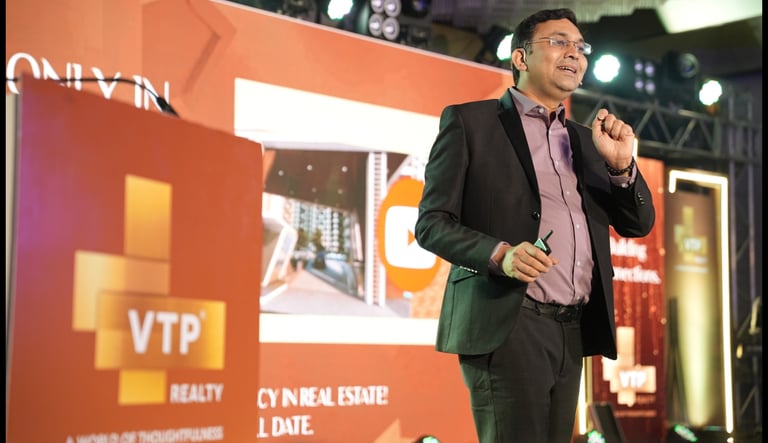
AI Didn’t Kill Creativity. It Exposed Lazy Thinking
Let’s be honest. AI is everywhere now. And most events still feel generic. By 2026, AI is not a differentiator.
It’s infrastructure. Personalized agendas, matchmaking, content recommendations, sentiment tracking are expected, not impressive.
The real question is no longer“Are you using AI?” It’s“What human problem is your AI actually solving?” Events like Salesforce Dreamforce work not because they use AI, but because AI is invisible. It quietly removes friction so people can focus on connection, relevance, and discovery.
The uncomfortable truth? AI has removed the excuse for one-size-fits-all experiences. If your event still feels broad, safe, and generic in 2026, it’s not a tech issue but rather a thinking issue.
Content Isn’t the Problem. Delivery Is.
Most corporate events still overload audiences with information and call it value.
More speakers.
More slides.
More talking.
But attention doesn’t collapse because people are distracted. It collapses because nothing is designed to be felt.
The most effective events today behave less like conferences and more like narratives. Apple understood this years ago: pacing matters, silence matters, anticipation matters.
By 2026, storytelling isn’t about theatrics. It’s about restraint. When everything is loud, nothing is meaningful.
When everything is “important,” nothing is memorable. Audiences won’t remember what you said. They’ll remember the moment they leaned forward!
Branding That Tries Too Hard Is the First Thing People Forget
There’s a misconception that strong branding means being everywhere.
More logos.
More screens.
More reminders.
In reality, over-branding is one of the fastest ways to lose emotional credibility. The best brand-led events, like Adobe Summit, don’t shout identity. They embed it. Through environment, interaction, tone, and behavior.
Research consistently shows experiential branding drives higher recall than traditional advertising.
But recall isn’t the real goal. Resonance is. When branding becomes part of how the space behaves, rather than what it displays, it stops feeling promotional. It starts feeling intentional. And intention is what audiences trust.
Lighting Isn’t Decoration. It’s Direction.
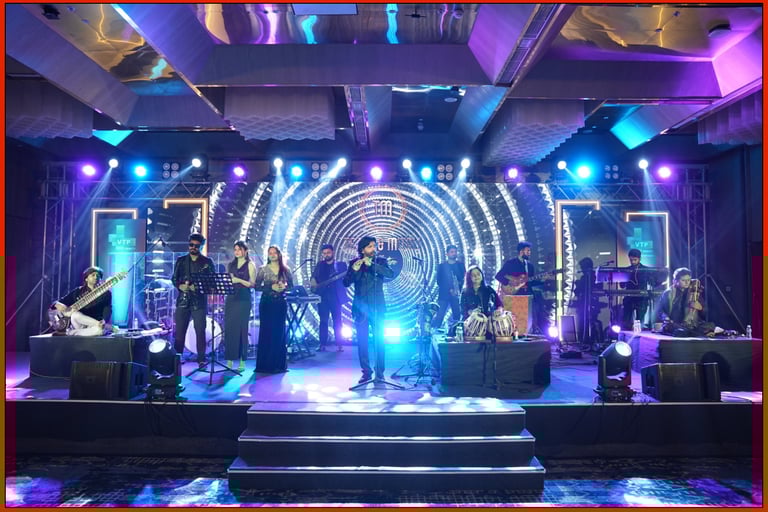
Lighting is still treated as a technical afterthought in far too many events. And audiences feel that, even if they can’t articulate it. Lighting tells people where to look, when to feel, and how important a moment is. When it’s disconnected from content, energy leaks. When it’s intentional, attention sharpens.
In 2026, lighting design is no longer about brightness or color palettes. It’s about rhythm. Moments breathe when light supports narrative. Moments fall flat when it doesn’t. The audience may not remember the lighting. But they will remember how focused and/or fatigued they felt.
Destination Venues Don’t Create Magic. Decisions Do.
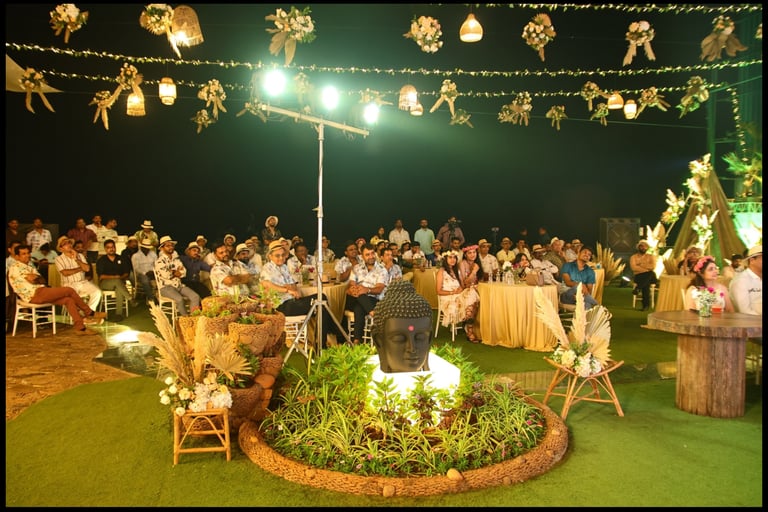
Destination events are back in action. But not for the reasons people think. A beautiful location doesn’t automatically inspire connection.In fact, the wrong destination amplifies exhaustion, disorientation, and emotional distance. Brands like Google use destination venues effectively because the choice is strategic, not aspirational. The environment supports the objective: deeper conversation, slower pacing, stronger relationships.
By 2026, venue selection is less about “wow” and more about alignment. What does this place allow people to feel, do and become during the event? When that answer is unclear, no destination is worth the flight.
The EQ Perspective: Design for Memory, Not Applause
The most dangerous metric in corporate events is applause. It feels like success. It often isn’t. Memory is quieter. It shows up weeks later in decisions, conversations and loyalty.
In 2026, the events that matter won’t be the biggest or the loudest. They’ll be the ones that respected attention, honored emotion, and understood their audience as humans first.
At Entertainment Quotient, we don’t believe events exist to impress. They exist to connect. Because when people feel something real, they don’t just remember the experience.They remember who gave it to them.
Team EQ! www.entertainmentquotient.com



MUMBAI
501, Stanford Plaza, Off New Link Road, Andheri West, Mumbai 53
DUBAI
722, Tamani Arts, Business Bay, Dubai, U.A.E P.O Box 115989
Contact Us
Email: info@entertainmentquotient.com
Phone: +91 9820481899
Whatsapp: +91 9820481800
Mumbai | Delhi | Bengaluru I Pune I Dubai
Copyright: Entertainment Quotient 2026